AI vs Human Intuition: Can Machines Sense What Data Can’t?
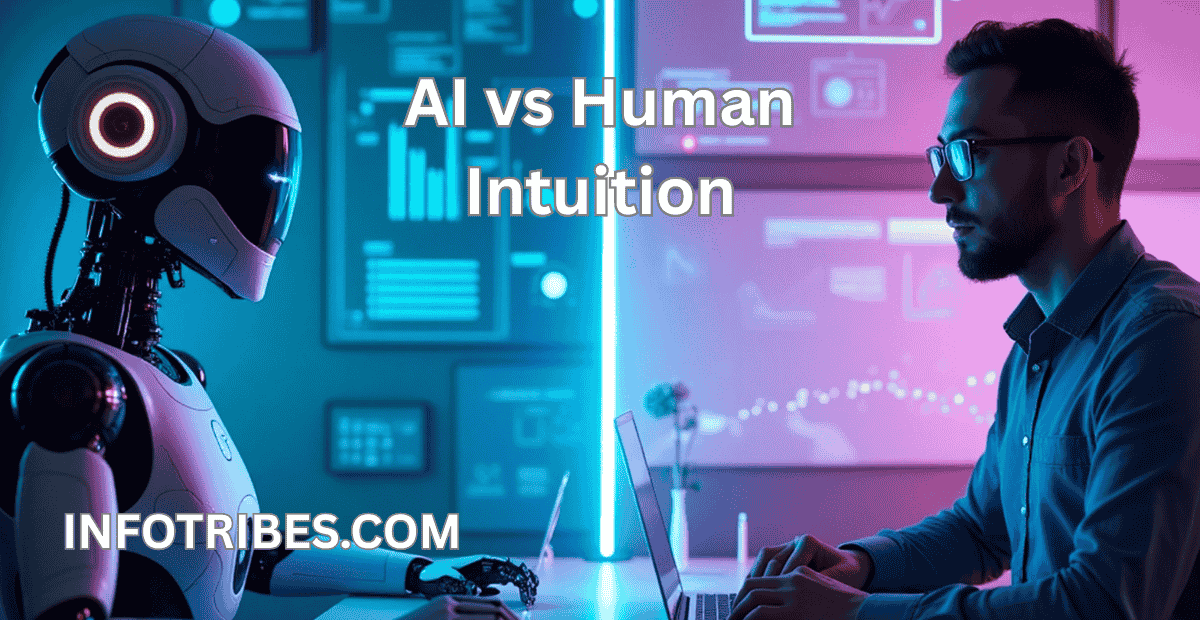
Artificial intelligence has revolutionized nearly every industry, from healthcare and finance to logistics and creative design. Yet, despite rapid advances in machine learning, deep learning, and predictive analytics, the debate continues: can AI truly replicate human intuition? Understanding the interplay between computational power and instinctive human judgment is essential for organizations seeking to leverage AI effectively while retaining the critical insights humans provide. The discussion around AI vs human intuition is not just philosophical—it has practical implications for decision-making, risk assessment, and innovation.
AI excels at processing vast amounts of structured and unstructured data, identifying patterns, and predicting outcomes with impressive accuracy. Human intuition, on the other hand, thrives in ambiguity, uncertainty, and scenarios with incomplete information. By comparing their strengths and weaknesses, organizations can better determine when to rely on algorithms, when to trust human judgment, and how the two can complement each other.
AI Honeypersons: Fake Digital Identities Used to Trap Hackers
Defining AI and Human Intuition
Before exploring the battle between machines and human instinct, it’s important to define the terms clearly.
- Artificial Intelligence (AI): AI refers to computer systems capable of performing tasks that normally require human intelligence. These include pattern recognition, decision-making, learning from data, and problem-solving. Advanced AI systems use neural networks, reinforcement learning, and natural language processing to simulate cognitive functions.
- Human Intuition: Intuition is the ability to understand or know something immediately without conscious reasoning. It draws on experience, subconscious pattern recognition, and emotional intelligence to make judgments in uncertain or ambiguous situations.
In the context of AI vs human intuition, AI can detect complex patterns that humans may overlook, while human intuition can synthesize incomplete information to make decisions that machines struggle to quantify.
Where AI Outperforms Human Intuition
AI systems are transforming industries because of their ability to analyze data far beyond human capacity. Key areas where AI demonstrates superiority include:
1. Big Data Analysis
AI can process terabytes of structured and unstructured data in seconds. Human intuition cannot match this speed, especially when dealing with global datasets or real-time analytics.
2. Pattern Recognition
Deep learning algorithms can identify subtle patterns in data that might elude human observers. In finance, AI can detect unusual trading patterns, while in healthcare, it can spot early signs of disease in imaging data.
3. Consistency and Reliability
Machines do not suffer from fatigue, bias, or emotional interference. AI algorithms consistently apply rules and learning models, reducing human error.
4. Predictive Analytics
AI excels at forecasting trends and behaviors by analyzing historical and current data. From supply chain management to energy consumption, predictive models powered by AI deliver insights at scale.
5. Complex Simulations
Simulations that involve millions of variables, such as climate models or molecular research, are feasible for AI but impossible for humans to evaluate unaided.
In these areas, AI has established clear advantages, making it indispensable for modern enterprises.
Where Human Intuition Remains Irreplaceable
Despite AI’s remarkable capabilities, human intuition remains crucial in scenarios where data is incomplete, ambiguous, or context-dependent. Key advantages include:
1. Decision-Making in Uncertain Environments
Humans excel at making judgment calls when faced with limited information or rapidly changing circumstances. Intuition allows individuals to anticipate risks, weigh consequences, and act decisively even without clear data.
2. Understanding Context and Nuance
Humans understand cultural, social, and ethical contexts that AI models often overlook. This contextual awareness influences decision-making in fields like diplomacy, law, and negotiation.
3. Creativity and Innovation
Intuition drives creativity, enabling humans to connect seemingly unrelated ideas or generate novel solutions. AI can mimic creativity to an extent, but it generally relies on recombining existing patterns rather than true conceptual leaps.
4. Emotional Intelligence
Empathy, moral judgment, and human-centric leadership require an understanding of emotions, which AI currently cannot replicate convincingly. Human intuition is vital for team management, patient care, and customer relations.
5. Ethical Decision-Making
Complex ethical dilemmas often involve trade-offs that cannot be easily quantified. Human intuition, informed by experience and moral reasoning, plays a critical role in guiding ethical choices.
AI vs Human Intuition in Healthcare
Healthcare provides one of the clearest examples of the interplay between AI and human intuition. AI systems are now capable of analyzing medical imaging, predicting disease outbreaks, and optimizing treatment protocols. For instance, deep learning models can detect tumors in radiology scans faster and sometimes more accurately than radiologists.
However, human intuition remains essential for:
- Diagnosing atypical cases that do not conform to standard patterns
- Integrating patient history, lifestyle, and psychosocial factors into care decisions
- Communicating complex diagnoses and treatment options empathetically
The most effective medical outcomes often arise from collaboration between AI and human intuition, rather than relying solely on one approach.
AI vs Human Intuition in Finance
In financial markets, AI algorithms dominate high-frequency trading, risk analysis, and fraud detection. They excel at identifying anomalies and executing trades at speeds impossible for humans.
Yet, human intuition provides:
- Strategic insights during market disruptions
- Interpretation of geopolitical or macroeconomic signals that are difficult to quantify
- Judgment calls based on experience and instinct rather than pure data
Here again, the optimal approach blends AI’s data-driven precision with human intuition’s contextual and anticipatory judgment.
AI vs Human Intuition in Creative Industries
Creative fields such as advertising, product design, and entertainment demonstrate the limitations of AI when intuition is central.
AI tools can:
- Generate music, art, and writing based on existing patterns
- Suggest design variations and marketing strategies based on data trends
However, human intuition drives:
- Conceptual originality
- Emotional resonance with audiences
- Risk-taking that challenges conventions
AI supports creativity but cannot fully replace the instinctive insights that humans bring to cultural and aesthetic decision-making.
The Synergy: AI-Augmented Human Intuition
Rather than framing AI and human intuition as opponents, it is more productive to explore complementarity. AI can process, filter, and analyze vast datasets, presenting distilled insights to humans. Human intuition then interprets these insights, makes judgment calls, and applies ethical reasoning.
AI as a Cognitive Amplifier
AI can act as an extension of human cognition, providing:
- Decision-support dashboards
- Predictive alerts for emerging risks
- Pattern recognition that highlights unusual signals
This augmentation allows humans to focus on higher-level reasoning and strategic thinking.
Feedback Loops
Human intuition can also refine AI models. Experienced professionals can:
- Correct AI predictions that are contextually inappropriate
- Identify subtle biases in training data
- Provide guidance for AI to better mimic nuanced decision-making
This two-way interaction enhances both AI performance and human decision-making quality.
Challenges in Integrating AI with Human Intuition
Despite the potential synergy, combining AI and human intuition is not without challenges:
1. Overreliance on AI
Humans may defer too heavily to AI outputs, undermining their own judgment. This “automation bias” can lead to poor decisions when AI models fail or face unforeseen conditions.
2. Understanding AI Limitations
AI systems often lack transparency, producing outputs that are difficult for humans to interpret. This opacity can reduce trust and hinder intuitive decision-making.
3. Cognitive Load
AI-generated insights can overwhelm decision-makers if presented without prioritization or contextual framing. Human intuition is most effective when supported, not buried, by data.
4. Ethical and Bias Concerns
AI models trained on biased or incomplete data can produce misleading recommendations. Human intuition and ethical reasoning are essential to counteract algorithmic bias.
Case Studies in AI vs Human Intuition
1. Healthcare Diagnostics
A study in oncology found that AI models detected certain cancer types more accurately than human radiologists. However, radiologists incorporating AI recommendations achieved the highest diagnostic accuracy, illustrating that human intuition and AI predictions together outperform either alone.
2. Financial Trading
High-frequency trading systems operate entirely on AI algorithms. Yet, during financial crises, human traders often intervene based on intuition, interpreting market sentiment and geopolitical signals that AI cannot quantify.
3. Disaster Response
AI systems can predict hurricane paths and simulate population impact, but human intuition guides evacuation decisions, resource allocation, and risk communication—areas requiring judgment under uncertainty.
The Philosophical Debate: Can Machines Truly Have Intuition?
Some AI theorists argue that advanced neural networks may eventually simulate forms of intuition by identifying patterns beyond human perception. Yet, critics maintain that intuition involves consciousness, subconscious experience, and emotional reasoning—qualities machines currently lack.
The debate is central to AI ethics, policy, and design:
- Should AI ever be given autonomous authority in critical decisions?
- Can AI-generated “intuition” be trusted in moral or life-critical contexts?
- How should humans balance machine recommendations with instinctive judgment?
These questions underscore that AI vs human intuition is not just a technological challenge but also a societal and ethical one.
Emerging Trends in AI-Enhanced Intuition
Several trends are shaping the landscape where AI supports human intuition:
1. Explainable AI (XAI)
Transparent AI models allow humans to understand why certain predictions were made, enabling more informed intuition-based decisions.
2. Hybrid Decision Systems
Organizations increasingly deploy hybrid models combining AI predictions with human oversight in healthcare, finance, and disaster management.
3. Emotional AI
Emerging systems analyze facial expressions, speech patterns, and physiological signals, attempting to augment human emotional intuition in customer service, healthcare, and education.
4. Continual Learning Models
AI systems capable of learning from ongoing human feedback adapt to new contexts, complementing human judgment and intuition in real time.
FAQ: AI vs Human Intuition
1. What is the difference between AI and human intuition?
AI relies on data, algorithms, and statistical models to make predictions, while human intuition uses experience, subconscious pattern recognition, and emotional insight to make decisions without explicit reasoning.
2. Can AI replicate human intuition?
AI can mimic certain intuitive-like decision patterns by detecting hidden trends, but it lacks consciousness, emotional judgment, and ethical reasoning, which are core to true human intuition.
3. Where does AI outperform human intuition?
AI excels in processing large datasets, pattern recognition, predictive analytics, and consistency. It can analyze information at scales and speeds far beyond human capacity.
4. Where does human intuition outperform AI?
Humans perform better in ambiguous situations, ethical dilemmas, creative problem-solving, and contexts requiring emotional intelligence or cultural understanding.
5. How can AI and human intuition work together?
AI provides data-driven insights and pattern detection, while humans interpret results, apply judgment, and make ethical or contextual decisions. Hybrid systems combining both yield the most effective outcomes.
6. Are there risks in relying solely on AI for decision-making?
Yes. Overreliance on AI can lead to automation bias, misinterpretation of model outputs, and ethical blind spots if human intuition and oversight are absent.
7. What industries benefit most from integrating AI and human intuition?
Healthcare, finance, disaster management, creative industries, and law enforcement benefit from hybrid approaches where AI complements human judgment.
Conclusion
The debate of AI vs human intuition is less about competition and more about synergy. AI can process data at unprecedented scale and speed, revealing patterns invisible to humans, while human intuition provides ethical reasoning, contextual understanding, and creativity that machines cannot replicate. Combining the two creates a hybrid intelligence capable of superior decision-making, innovation, and risk management. As AI technologies continue to evolve, leveraging AI as an amplifier of human intuition rather than a replacement ensures balanced, effective, and ethical outcomes in complex and uncertain environments.