How AI Is Changing Freelance Work Forever
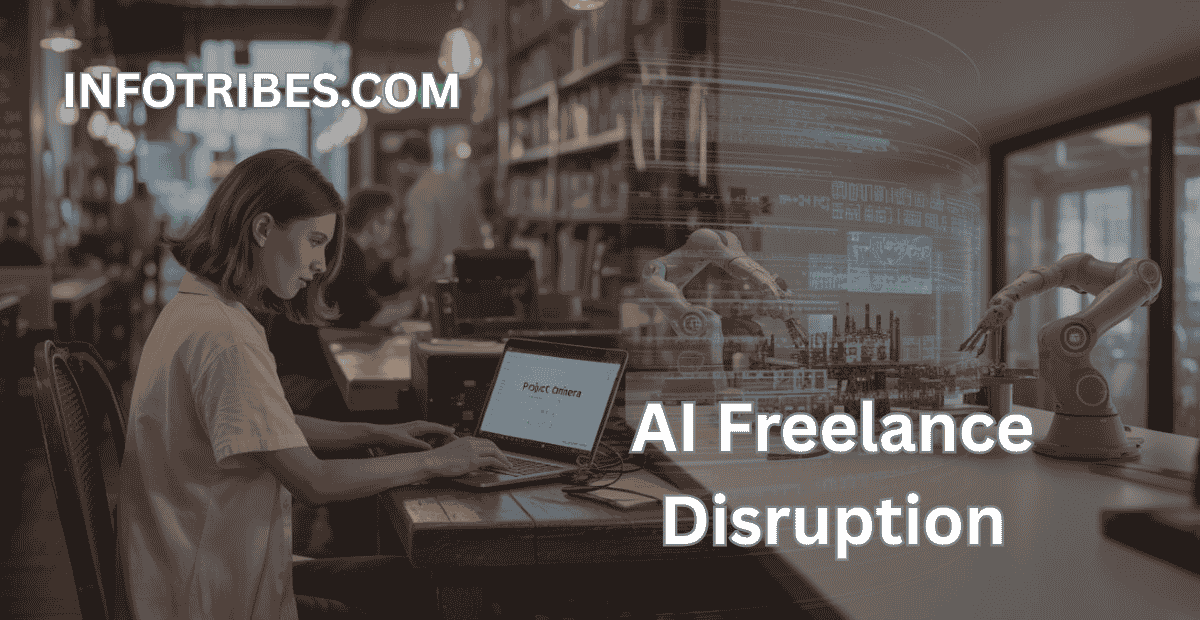
The freelance economy has grown tremendously over the last decade, fueled by platforms connecting talent to clients worldwide. But in 2026, one factor is reshaping the landscape faster than anything before: artificial intelligence. From content creation to graphic design, software development, and marketing, AI tools are changing how freelancers work, the value of their skills, and the expectations of clients. This shift is often referred to as AI freelance disruption, and it is fundamentally altering the future of independent work.
While some freelancers embrace AI as a productivity booster, others fear it will commoditize their expertise, lower pay rates, or even replace entire roles. Understanding the scope, benefits, and risks of this disruption is essential for anyone navigating the freelance economy today.
Startups Are Launching Worse Products Than Before
Understanding AI Freelance Disruption
The term AI freelance disruption describes how AI technologies—ranging from large language models and generative design tools to automated coding assistants—are changing freelance workflows. Unlike past technological shifts, AI is impacting nearly every aspect of freelance work, including:
- Speed of task completion
- Quality and consistency of deliverables
- Pricing structures and competition
- Client expectations and skill requirements
Freelancers who fail to adapt risk being left behind, while those who leverage AI effectively can scale their operations, deliver higher-quality work, and diversify their offerings.
OpenAI – ChatGPT for Professionals
AI Tools Transforming Freelance Work
Several AI tools are central to this disruption. For writers, tools like ChatGPT and Jasper assist with content generation, editing, and idea brainstorming. Graphic designers use AI-powered platforms like MidJourney, DALL·E, and Canva’s AI features to create visuals faster. Coders now rely on GitHub Copilot and other AI assistants to automate repetitive tasks or suggest code solutions. Even marketing freelancers leverage AI for automated social media posts, ad copywriting, and data analytics.
These tools reduce the time needed to produce high-quality results but also blur the line between human creativity and AI output. This shift has contributed significantly to AI freelance disruption, as traditional skillsets are now augmented or challenged by automation.
The Productivity Advantage
One of the most immediate effects of AI freelance disruption is a productivity boost. Tasks that once took hours or days can now be completed in minutes. For example, content writers can generate initial drafts with AI and focus on refinement, while designers can rapidly iterate concepts without starting from scratch each time.
This increased productivity allows freelancers to take on more clients, explore higher-value projects, or specialize in complex tasks that AI cannot fully handle. However, it also raises client expectations; faster delivery times are now standard, and slower freelancers may be overlooked.
The Commoditization Challenge
While AI offers opportunities, it also threatens to commoditize certain freelance services. Routine tasks—such as basic article writing, simple graphic design, or entry-level coding—are increasingly handled efficiently by AI, sometimes at a fraction of the cost of human labor.
This commoditization is a core aspect of AI freelance disruption. Freelancers performing easily automated work must either specialize, enhance their unique value proposition, or adapt by integrating AI into their workflow. Those who ignore the trend risk losing clients to AI-powered alternatives.
Changing Client Expectations
Clients are becoming accustomed to the speed and quality of AI-augmented freelancers. They expect faster turnaround times, higher output, and sometimes lower costs. Freelancers are now evaluated not only on creativity or expertise but also on their ability to leverage AI efficiently.
For example, a copywriter who integrates AI to generate drafts, perform SEO optimization, and analyze audience engagement can deliver significantly more value than one relying solely on traditional methods. This shift in client expectations is a hallmark of AI freelance disruption.
Upskilling and Adaptation
To thrive in the age of AI, freelancers must upskill strategically. This includes learning how to use AI tools effectively, understanding their limitations, and combining AI output with human creativity and critical thinking. Training in AI integration, prompt engineering, and workflow optimization has become essential.
Freelancers who can differentiate themselves by combining technical skill, creativity, and AI literacy are positioned to benefit from the disruption. The inability to adapt, however, may lead to obsolescence in some areas.
Ethical Considerations in AI Freelance Work
AI freelance disruption also raises ethical questions. For instance, when AI generates content, who owns the intellectual property? How should freelancers disclose AI use to clients? Is it ethical to bill hours when AI significantly reduces effort?
Freelancers must navigate these issues carefully to maintain trust and credibility. Transparency about AI usage, combined with human oversight, is increasingly expected by both clients and professional communities.
Impact on Freelance Market Rates
AI adoption affects market dynamics. On one hand, productivity gains can justify higher rates for AI-augmented freelancers who deliver more value. On the other hand, commoditized tasks may experience downward pressure as clients realize certain work can be performed partially or fully by AI.
This dual effect is central to AI freelance disruption, creating both winners and losers in the freelance economy. Freelancers need to reassess pricing strategies, focus on high-value skills, and consider offering AI-powered services as part of their portfolio.
Opportunities for New Services
AI is not just replacing tasks—it’s enabling new services that didn’t exist before. Freelancers can now offer AI prompt consulting, AI-assisted content strategy, automated design packages, or AI analytics services. Startups and small businesses increasingly seek freelancers who can combine domain expertise with AI know-how.
By identifying and targeting these emerging niches, freelancers can leverage the disruption to diversify revenue streams and secure long-term relevance.
Sector-Specific Effects
Writing and Content Creation: AI tools can generate drafts, summarize content, and optimize SEO, allowing writers to focus on strategy, storytelling, and nuanced revisions.
Graphic Design: AI accelerates visual ideation and rapid prototyping, but complex branding or high-end illustration still requires human creativity.
Software Development: Coding assistants reduce repetitive coding and debugging, freeing developers to tackle architecture and creative problem-solving.
Marketing and Analytics: AI automates ad creation, social media scheduling, and customer insights, enabling freelancers to focus on strategy, audience segmentation, and campaign analysis.
Across sectors, the impact of AI freelance disruption varies, but the trend is universal: AI is becoming a standard component of the freelance toolkit.
Geographic and Demographic Considerations
AI freelance disruption affects regions differently. In high-income countries, freelancers can access advanced AI tools and training. In emerging markets, access may be limited, creating uneven opportunities. Freelancers in regions with high tool adoption may be pressured to integrate AI just to remain competitive, while others can still rely on traditional workflows.
Demographically, younger freelancers often adapt more quickly due to familiarity with AI tools and digital platforms, while seasoned freelancers may face a steeper learning curve but possess strategic or domain knowledge that AI cannot replace.
Challenges of AI Integration
Adopting AI tools is not without challenges. Technical issues, subscription costs, learning curves, and integration into existing workflows are real obstacles. Freelancers must experiment, test AI tools, and determine which solutions genuinely enhance productivity without compromising quality.
Failure to integrate effectively can result in wasted effort, inconsistent output, or dissatisfaction from clients—factors contributing to perceived failures in AI adoption and the broader narrative of AI freelance disruption.
Maintaining Human Creativity
Despite AI’s power, human creativity, judgment, and interpersonal skills remain irreplaceable. Freelancers who succeed will be those who combine AI efficiency with human insight, empathy, and contextual understanding. Storytelling, brand identity, complex problem-solving, and client communication are areas where human skill continues to provide a competitive edge.
Recognizing where AI can assist versus replace is a critical skill in navigating the ongoing AI freelance disruption.
Preparing for the Future
Freelancers preparing for the AI era must:
- Stay informed about new AI tools and updates
- Experiment with AI to enhance productivity and creativity
- Focus on high-value skills that are difficult to automate
- Engage in continuous learning and upskilling
- Transparently communicate AI usage with clients
Adopting this approach allows freelancers not just to survive but thrive amidst AI freelance disruption.
Broader Implications for the Freelance Economy
The ripple effects of AI freelance disruption extend beyond individual freelancers. Platforms like Upwork, Fiverr, and Toptal may redefine service categories, introducing AI-assisted offerings or specialized niches. Client expectations will shift, and competition may intensify globally as AI lowers barriers to entry.
Policy makers and industry associations may also need to address ethical concerns, intellectual property rules, and equitable access to AI tools to ensure fair market conditions for freelancers.
FAQ
1. What is AI freelance disruption?
AI freelance disruption refers to the significant changes in freelance work caused by artificial intelligence. It includes shifts in productivity, client expectations, pricing, and the types of tasks that freelancers can perform.
2. How is AI affecting freelance work?
AI tools assist with content creation, graphic design, coding, marketing, and analytics. They speed up tasks, reduce repetitive work, and allow freelancers to deliver higher-quality results, but they also create competition and commoditization.
3. Which freelance jobs are most affected by AI?
Routine and repetitive roles—like basic content writing, simple graphic design, or entry-level coding—are most susceptible. High-level creative, strategic, or specialized work is less likely to be fully automated.
4. Can freelancers benefit from AI?
Yes. Freelancers who integrate AI tools into their workflow can increase productivity, deliver better work, diversify services, and offer higher-value packages to clients.
5. What skills are essential in the age of AI freelance disruption?
Key skills include AI tool proficiency, creativity, strategic thinking, client communication, prompt engineering, and problem-solving that AI cannot fully replicate.
Conclusion
AI is reshaping the freelance economy through AI freelance disruption, creating both challenges and opportunities. While repetitive tasks are increasingly automated and competition grows, freelancers who embrace AI can enhance productivity, expand service offerings, and command higher value. Success in this new era depends on combining human creativity, strategic thinking, and AI fluency. Freelancers who adapt proactively will thrive, while those who ignore the shift risk being left behind.