AI Models Are Getting Smarter — But Less Reliable
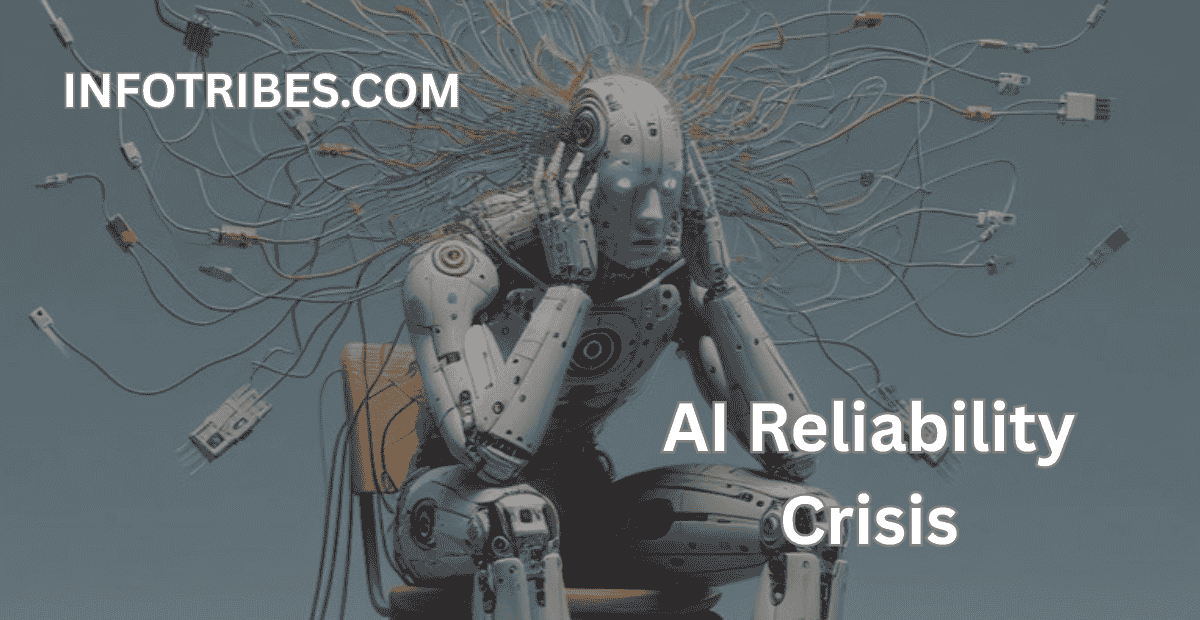
Artificial intelligence models have advanced at an astonishing pace. Each new generation promises better reasoning, higher accuracy, and broader capabilities. From writing code and diagnosing medical conditions to generating images and answering complex questions, AI systems are undeniably smarter than ever. Yet, alongside this progress, a troubling pattern has emerged: as AI models grow more powerful, they are also becoming less predictable and less reliable. This growing tension is increasingly referred to as the AI reliability crisis.
Users now experience confident but incorrect answers, inconsistent outputs, hallucinated facts, and unpredictable failures—often from the same model that moments earlier delivered impressive results. Understanding why this is happening requires looking beyond surface-level performance metrics and examining how modern AI systems are built, deployed, and evaluated.
How AI Is Changing Freelance Work Forever
The Illusion of Intelligence
One reason the AI reliability crisis feels so surprising is that modern AI models appear remarkably intelligent. Large language models can mimic expert-level explanations, write fluent prose, and reason through complex problems. This surface competence creates an illusion of understanding.
In reality, most AI models do not “understand” information in the human sense. They predict likely outputs based on patterns in training data. As models scale, they become better at pattern matching, but not necessarily better at truth verification. This gap between fluency and factual reliability is a core driver of the AI reliability crisis.
Bigger Models, Bigger Failure Modes
As AI models grow in size, they gain new abilities—but also new ways to fail. Larger models operate across vast knowledge domains, increasing the chances of subtle errors. When mistakes occur, they are often harder to detect because outputs sound plausible.
Smaller models tend to fail obviously. Larger models fail convincingly. This distinction matters because users are more likely to trust an incorrect answer when it is delivered confidently and coherently. The scale of modern models has amplified the AI reliability crisis by making errors less visible but more impactful.
Training Data Limitations
At the heart of AI reliability issues lies training data. Modern AI models are trained on enormous datasets scraped from the internet, books, code repositories, and other sources. While this breadth enables general intelligence, it also introduces inconsistencies, outdated information, and biases.
AI systems do not inherently distinguish between high-quality and low-quality data unless explicitly trained to do so. As a result, models may combine conflicting sources into a single response, producing answers that are internally coherent but factually incorrect. This data ambiguity fuels the ongoing AI reliability crisis.
Hallucinations: The Most Visible Symptom
One of the most discussed aspects of the AI reliability crisis is hallucination—the generation of information that appears factual but is entirely fabricated. AI models may invent citations, statistics, quotes, or even historical events.
Hallucinations occur because language models are optimized to continue text fluently, not to verify truth. When the model lacks certainty, it often fills gaps with plausible-sounding content rather than admitting uncertainty. As AI systems are increasingly used in professional settings, hallucinations represent a serious reliability risk.
Over-Optimization for Benchmarks
Another contributor to the AI reliability crisis is the industry’s reliance on benchmarks. AI models are often evaluated using standardized tests that measure accuracy, reasoning, or language understanding. While benchmarks are useful, they can be misleading.
Models trained to perform well on benchmarks may overfit to specific tasks while underperforming in real-world scenarios. They may excel in controlled environments but behave unpredictably when faced with ambiguous or novel inputs. This disconnect between benchmark success and practical reliability deepens the AI reliability crisis.
The Problem of Inconsistent Outputs
Users frequently notice that AI models give different answers to the same question when phrased slightly differently or asked at different times. This inconsistency undermines trust, especially in critical applications such as healthcare, law, and finance.
Inconsistency arises from probabilistic generation and internal randomness. While variability can enhance creativity, it becomes problematic when reliability is required. The inability to guarantee consistent outputs is a central concern in discussions about the AI reliability crisis.
Tool Integration Makes Things Worse
Modern AI systems are often integrated with external tools such as search engines, code execution environments, or APIs. While this enhances capabilities, it also introduces new failure points.
If a tool returns incorrect data, times out, or behaves unexpectedly, the AI may still generate a response without properly handling the error. Users may not realize whether an answer came from verified sources or speculative reasoning. This layered complexity compounds the AI reliability crisis by making error sources harder to trace.
User Overtrust and Automation Bias
Human behavior plays a role in the AI reliability crisis. Users tend to overtrust systems that appear intelligent, a phenomenon known as automation bias. When AI delivers confident answers, users may stop verifying information independently.
This overreliance increases the consequences of AI errors. In professional environments, incorrect AI outputs can propagate into reports, codebases, or decisions without sufficient scrutiny. The smarter AI appears, the more dangerous its unreliability becomes.
Rapid Deployment Without Guardrails
The competitive AI landscape encourages rapid deployment. Companies race to release new models and features, often prioritizing innovation speed over robustness. Reliability testing, red-teaming, and long-term monitoring may be insufficient.
As AI systems are integrated into products used by millions, even rare errors can affect large populations. This rush-to-market culture intensifies the AI reliability crisis, as systems are exposed to real-world complexity before being fully understood.
Alignment vs Accuracy
Many AI safety efforts focus on alignment—ensuring models behave ethically and follow instructions. While alignment is critical, it does not guarantee accuracy. A well-aligned model can still provide incorrect information politely and confidently.
This distinction matters because alignment improvements can mask underlying reliability issues. Users may perceive aligned responses as trustworthy, even when factual accuracy is compromised. The gap between alignment and truth contributes to the AI reliability crisis.
Domain-Specific Reliability Gaps
AI reliability varies significantly across domains. Models may perform well in general knowledge tasks but fail in specialized fields such as medicine, law, or engineering. Even within a single domain, performance may fluctuate based on phrasing or context.
These domain-specific weaknesses are often invisible to non-experts, increasing the risk of misuse. The uneven reliability landscape underscores why the AI reliability crisis cannot be solved with a single technical fix.
Lack of Explainability
Many AI models function as black boxes, offering little insight into how conclusions are reached. When outputs are wrong, it is difficult to diagnose why. This lack of explainability hinders debugging, accountability, and trust.
Without clear reasoning paths, users cannot easily assess confidence levels or error likelihood. Explainability limitations are a structural contributor to the AI reliability crisis, particularly in regulated industries.
Feedback Loops and Model Degradation
As AI-generated content floods the internet, future models may be trained on outputs from earlier models. This creates feedback loops where errors, biases, and inaccuracies are reinforced over time.
If not carefully managed, these loops can degrade overall model quality, making reliability worse rather than better. This long-term risk is an emerging dimension of the AI reliability crisis that extends beyond individual model releases.
Reliability vs Creativity Trade-Off
There is an inherent trade-off between creativity and reliability. Models tuned for creative tasks benefit from variability and exploration, while reliable systems require constraint and predictability.
As general-purpose AI models attempt to serve both roles, reliability can suffer. Systems optimized to be engaging and creative may sacrifice precision. This tension is central to the AI reliability crisis, especially for multipurpose models.
Enterprise Adoption Raises the Stakes
As businesses adopt AI for mission-critical workflows, reliability becomes non-negotiable. Errors that were once amusing become costly. Incorrect financial analysis, flawed legal summaries, or faulty code can have serious consequences.
Enterprise use cases expose the limitations of current AI systems more clearly than consumer applications. The growing mismatch between enterprise expectations and AI performance highlights the urgency of addressing the AI reliability crisis.
Why Smarter Doesn’t Mean Safer
Intelligence and reliability are not the same. A system can be highly capable yet unreliable if it lacks robust verification, consistency, and transparency. In some cases, increased intelligence amplifies risk by enabling more complex and convincing errors.
This paradox lies at the heart of the AI reliability crisis: smarter models expand what AI can do, but also expand the consequences when things go wrong.
The Path Forward
Solving the AI reliability crisis will require multiple approaches: better training data curation, improved uncertainty estimation, stronger evaluation methods, clearer user interfaces, and human-in-the-loop systems. No single breakthrough will eliminate the problem.
What is clear is that reliability must become a first-class metric, not an afterthought. As AI continues to evolve, trust will depend less on how impressive models appear and more on how consistently they deliver correct, verifiable results.
FAQ
1. What is the AI reliability crisis?
The AI reliability crisis refers to the growing issue where AI models produce confident but incorrect, inconsistent, or fabricated outputs despite appearing highly intelligent and capable.
2. Why are smarter AI models becoming less reliable?
As AI models scale, they become better at generating fluent responses but not necessarily better at verifying facts. Larger models also introduce complex failure modes, making errors harder to detect.
3. What are AI hallucinations and why do they matter?
Hallucinations occur when AI generates false information that sounds credible. They matter because users may trust and act on incorrect outputs, especially in professional or high-stakes contexts.
4. Can AI reliability be improved?
Yes, but it requires better training data, stronger evaluation methods, uncertainty handling, human oversight, and clearer system limitations. Reliability must be treated as a core metric, not a secondary feature.
5. Is the AI reliability crisis a risk for businesses?
Absolutely. Businesses relying on AI for decision-making, coding, legal summaries, or analytics face real risks if AI outputs are not verified, consistent, and explainable.
Conclusion
The AI reliability crisis highlights a critical paradox of modern artificial intelligence: as models become more powerful, their failures become more subtle and more dangerous. Fluency is no longer a reliable indicator of truth, and intelligence does not guarantee accuracy. While AI systems are transforming productivity and innovation, their unpredictable behavior demands caution, transparency, and human oversight. The future of AI adoption will depend not on how impressive models appear, but on how consistently they deliver trustworthy and verifiable results.